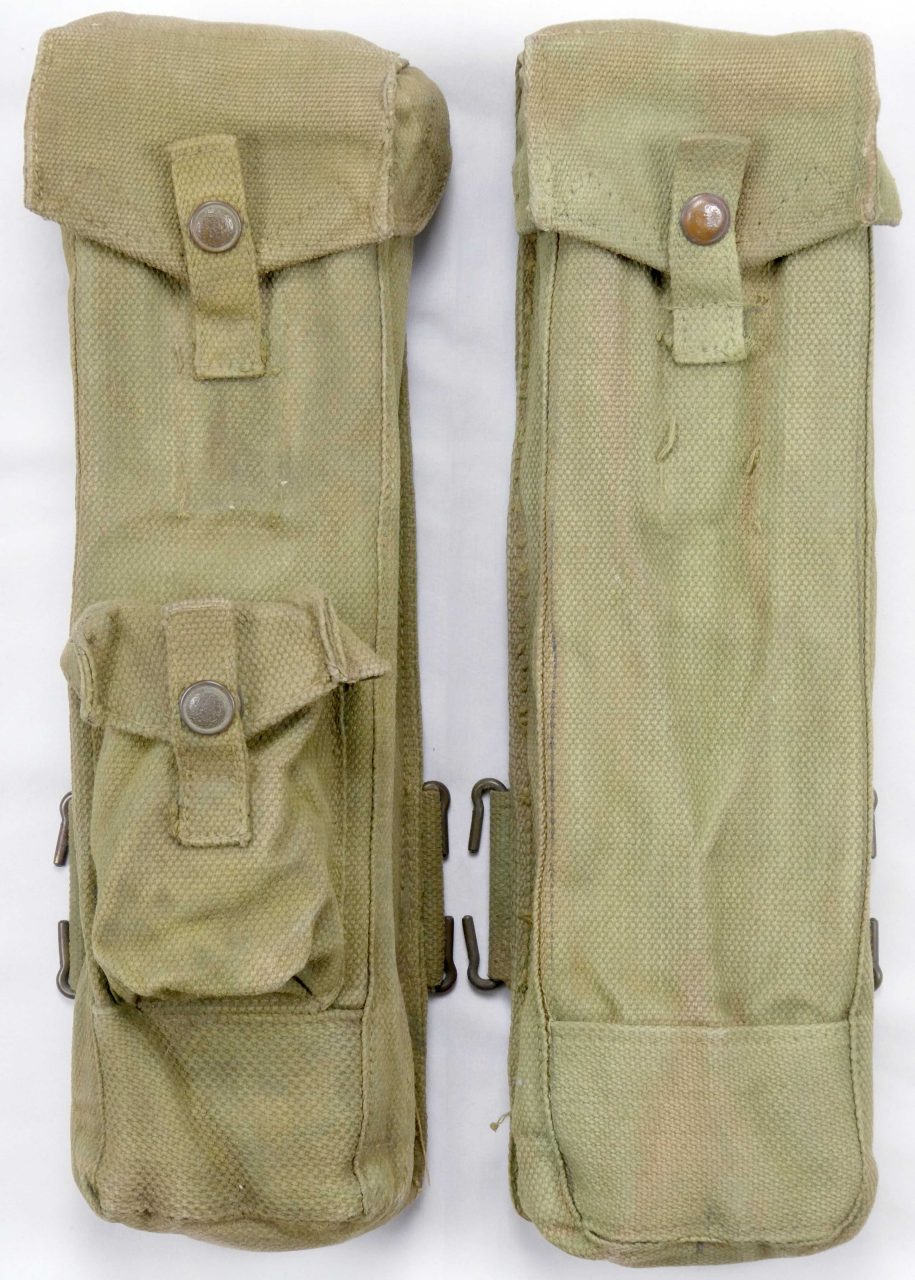
The British Royal Navy and Air Force adopted the Lanchester submachine gun in 1941 after losing vast amounts of materiel during the retreat from France and the Dunkirk evacuation. The Lanchester was a reverse-engineered copy of the German MP-28 Bergmann submachine gun with only some minor changes like a corrosion-resistant brass magazine housing for maritime environments and simpler production [1], and a stock shape based on the existing Lee-Enfield rifle’s. Otherwise, like most pre-WW2 era submachine guns, the design required a significant amount of fine machine work so it was largely superseded by the much simpler STEN which was cruder, but optimized for mass production. The Lanchester served throughout WW2 and into the 1970’s. It was widely exported overseas with surplus Royal Navy ships bought by other countries like Egypt. [2]
Lanchester pouches were originally made to fit the World War 1 era P08 belts widely in circulation in the Royal Navy. When all services adopted Pattern 37 webbing, the pouches were re-fit at the factory to the new webbing’s specifications some time around September 9, 1943 with Admiralty Fleet Order (AFO) 4187. [3]
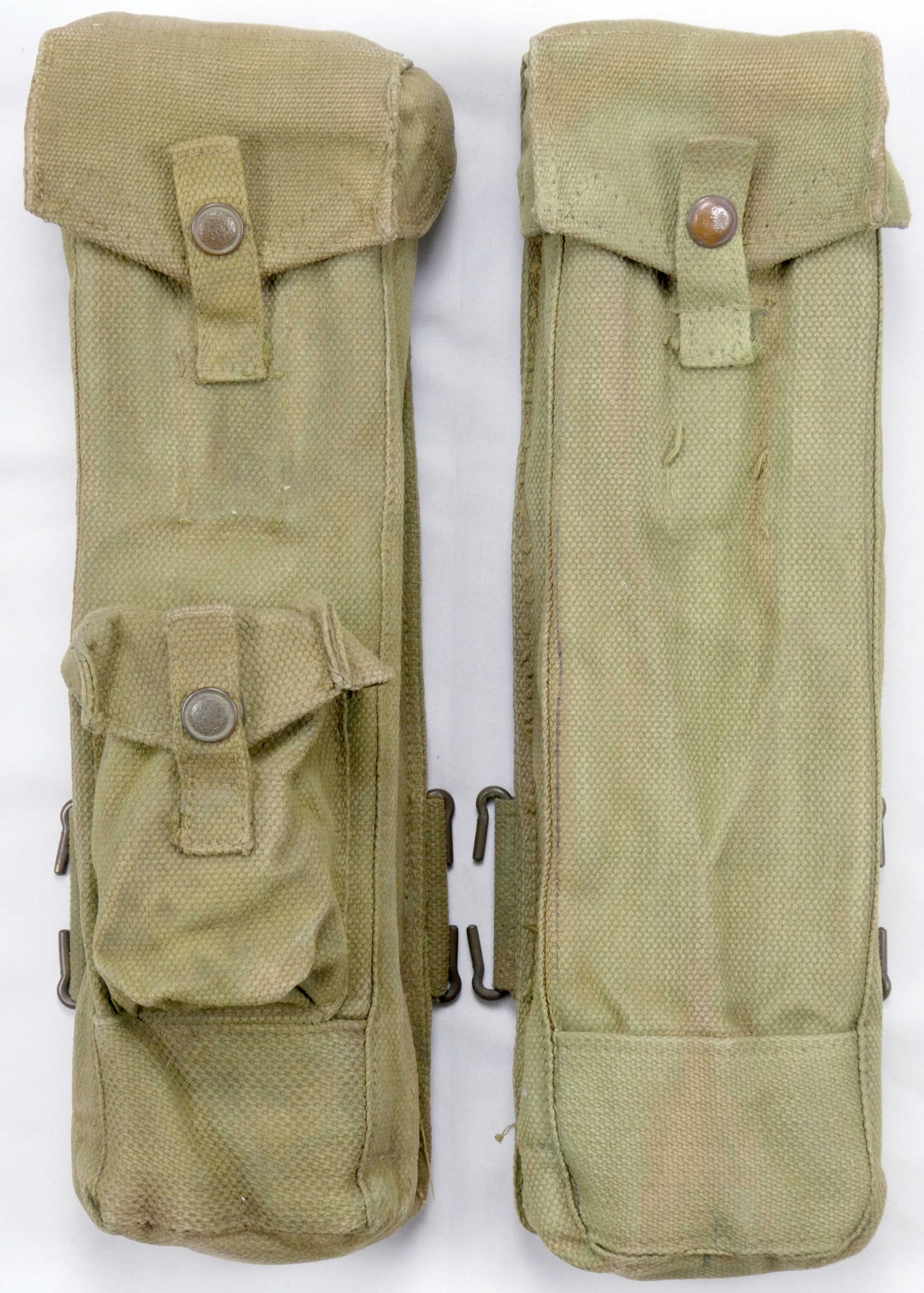
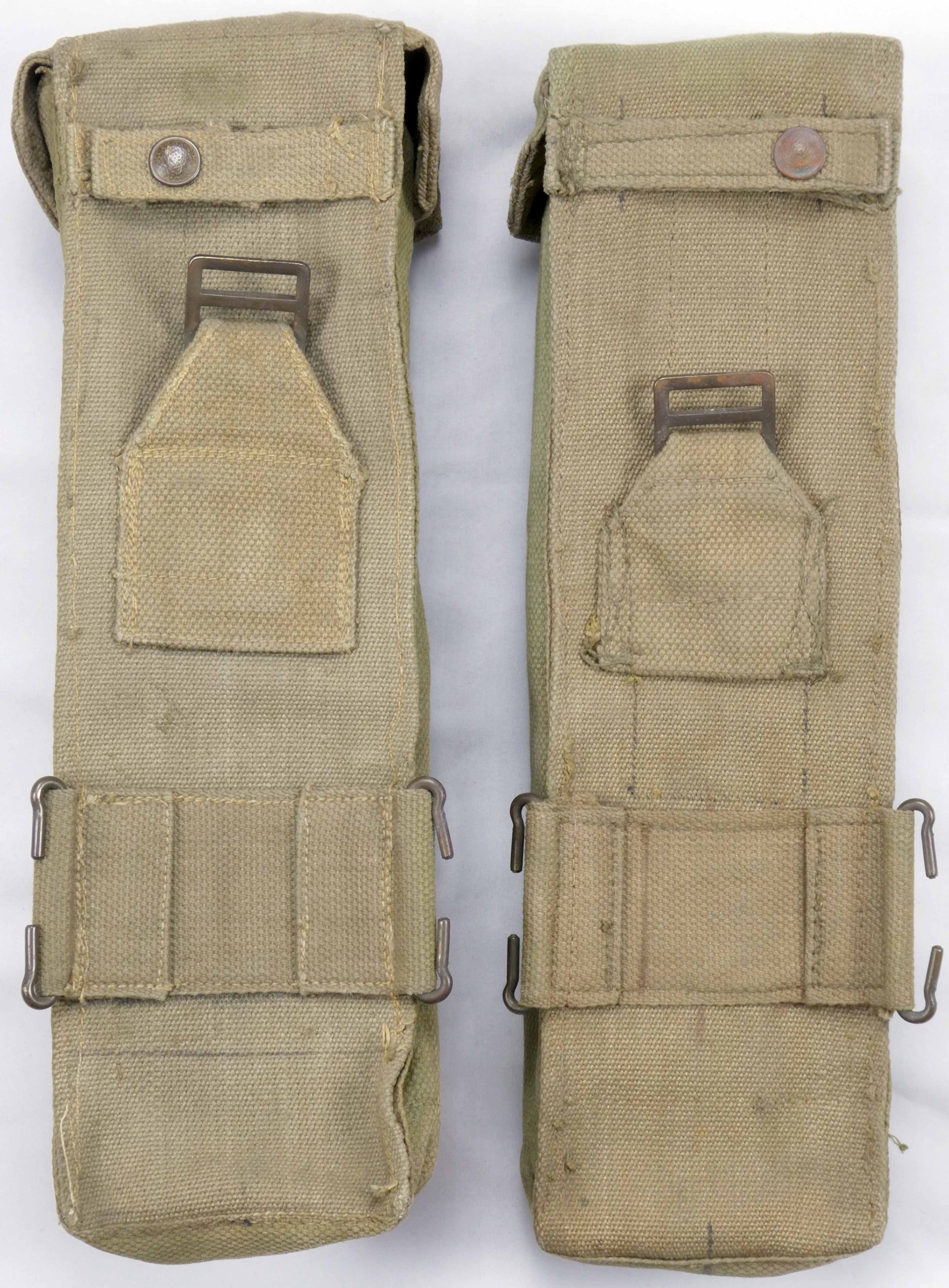
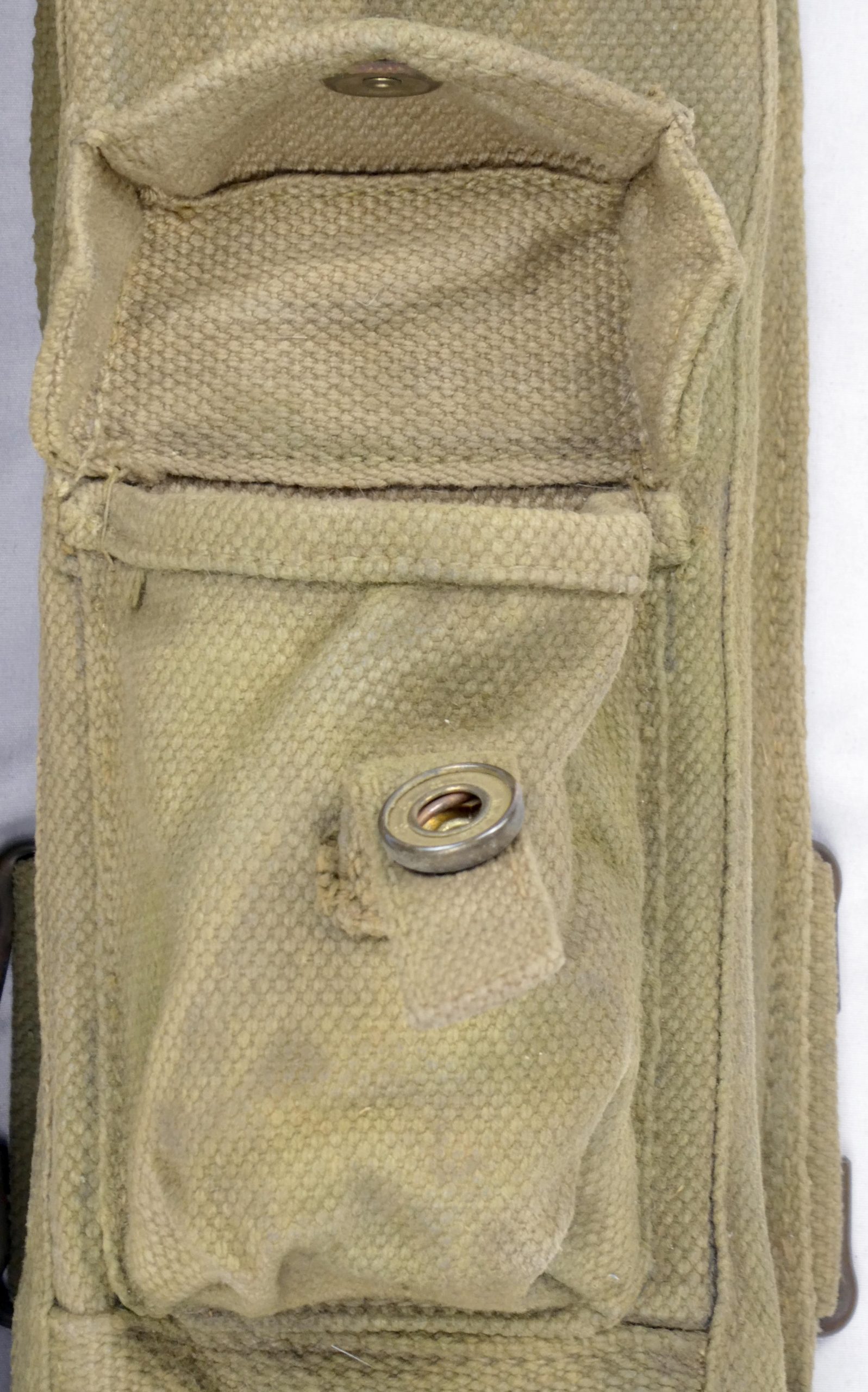
This set was altered at the factory to fit Pattern 37 specification belts. The pouches are supposed to be asymmetric since the one with the smaller pouch sewn to the front is meant to carry the magazine reloading tool, which was rarely used in reality. This pouch is supposed to be worn on the user’s right side. [3]
Reloader Tool Pouch:
Sides:
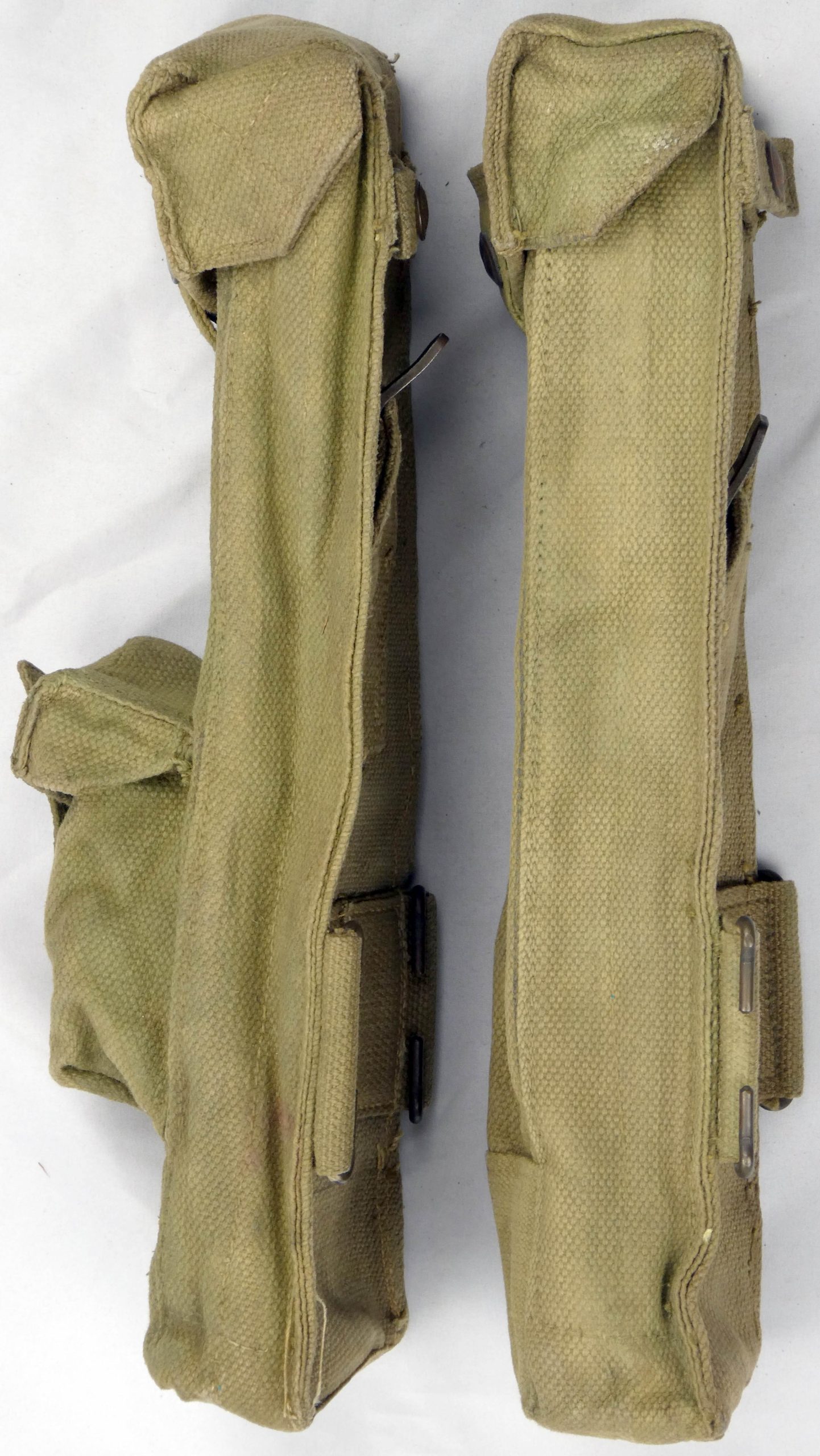
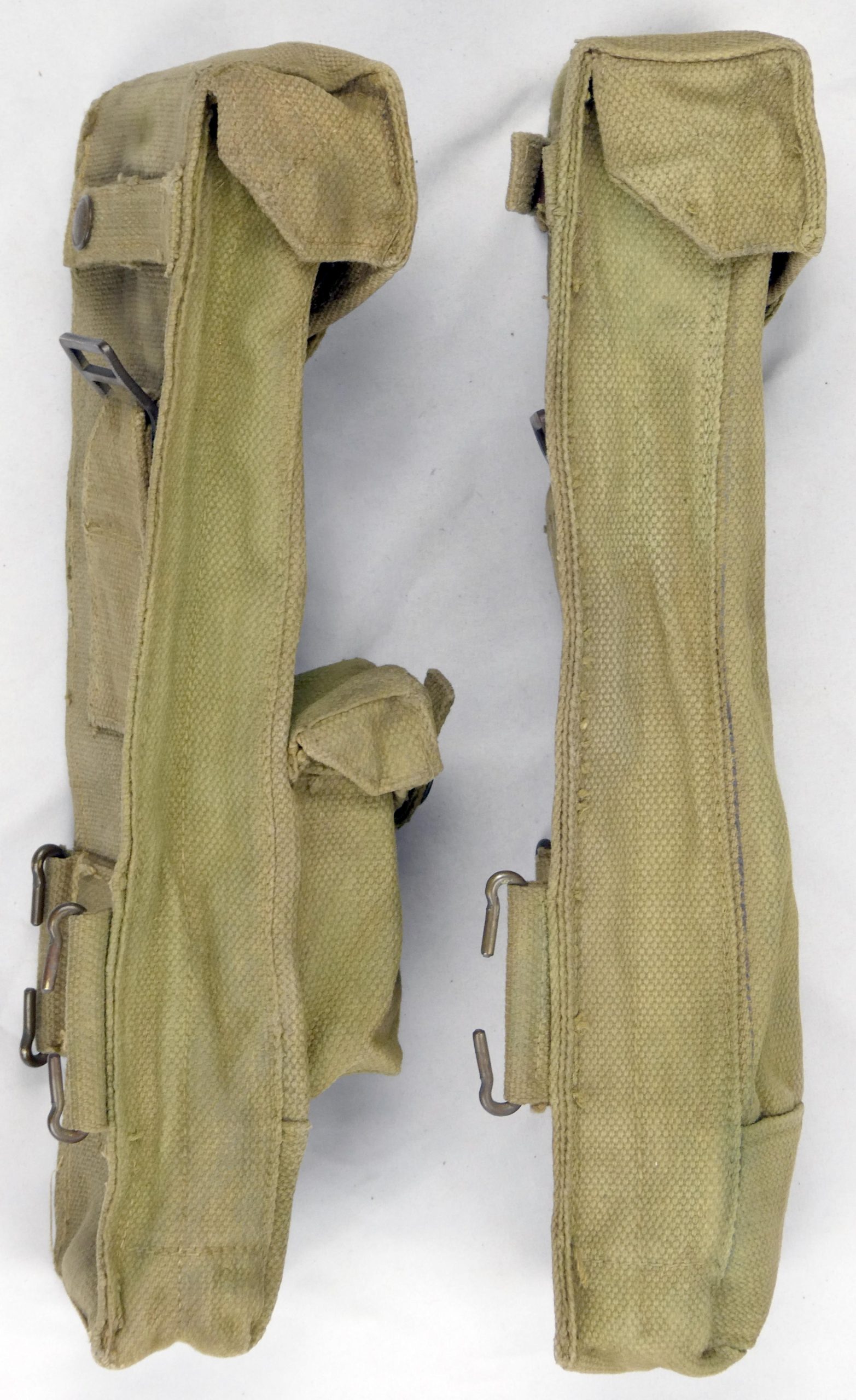
Top:
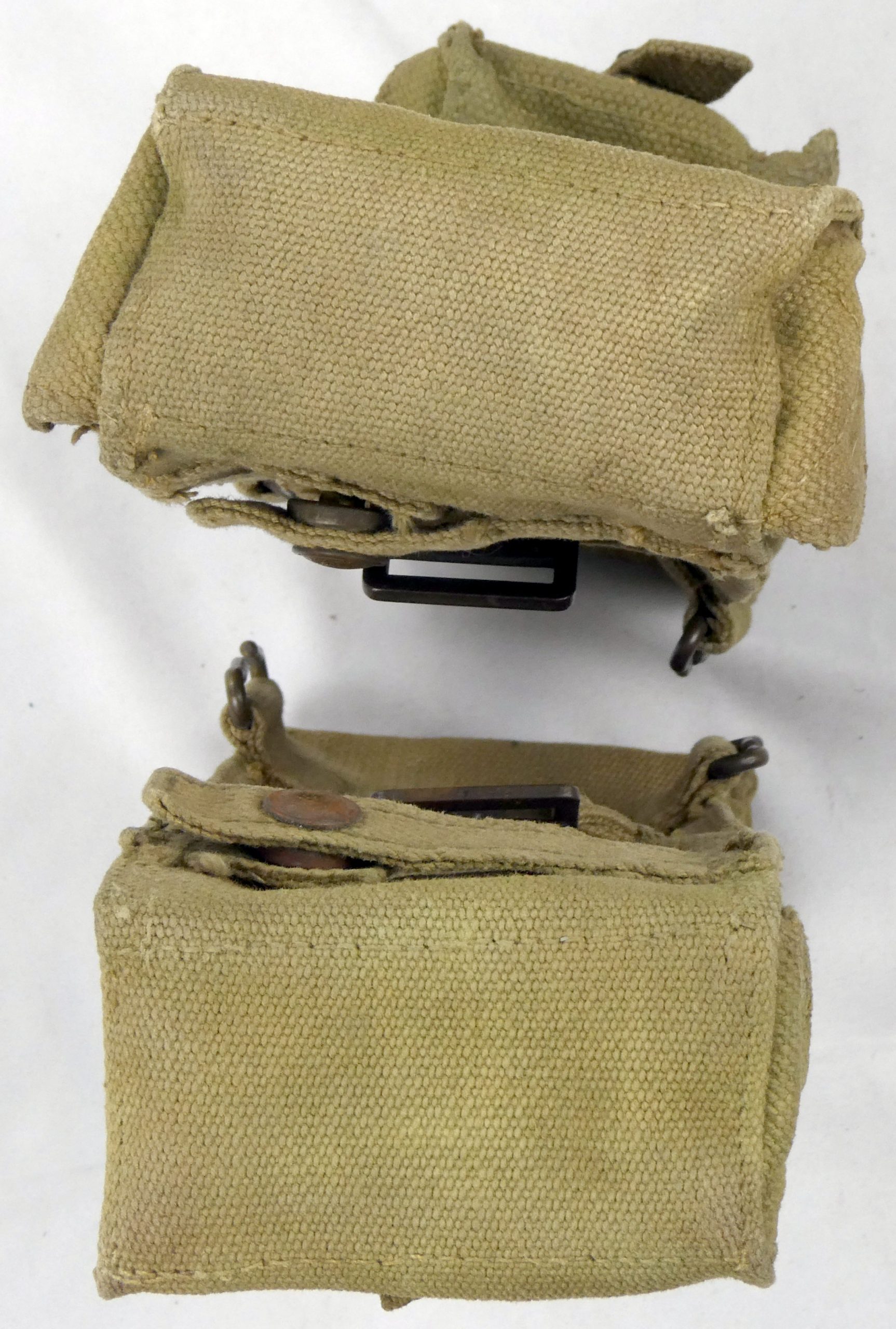
Bottom:
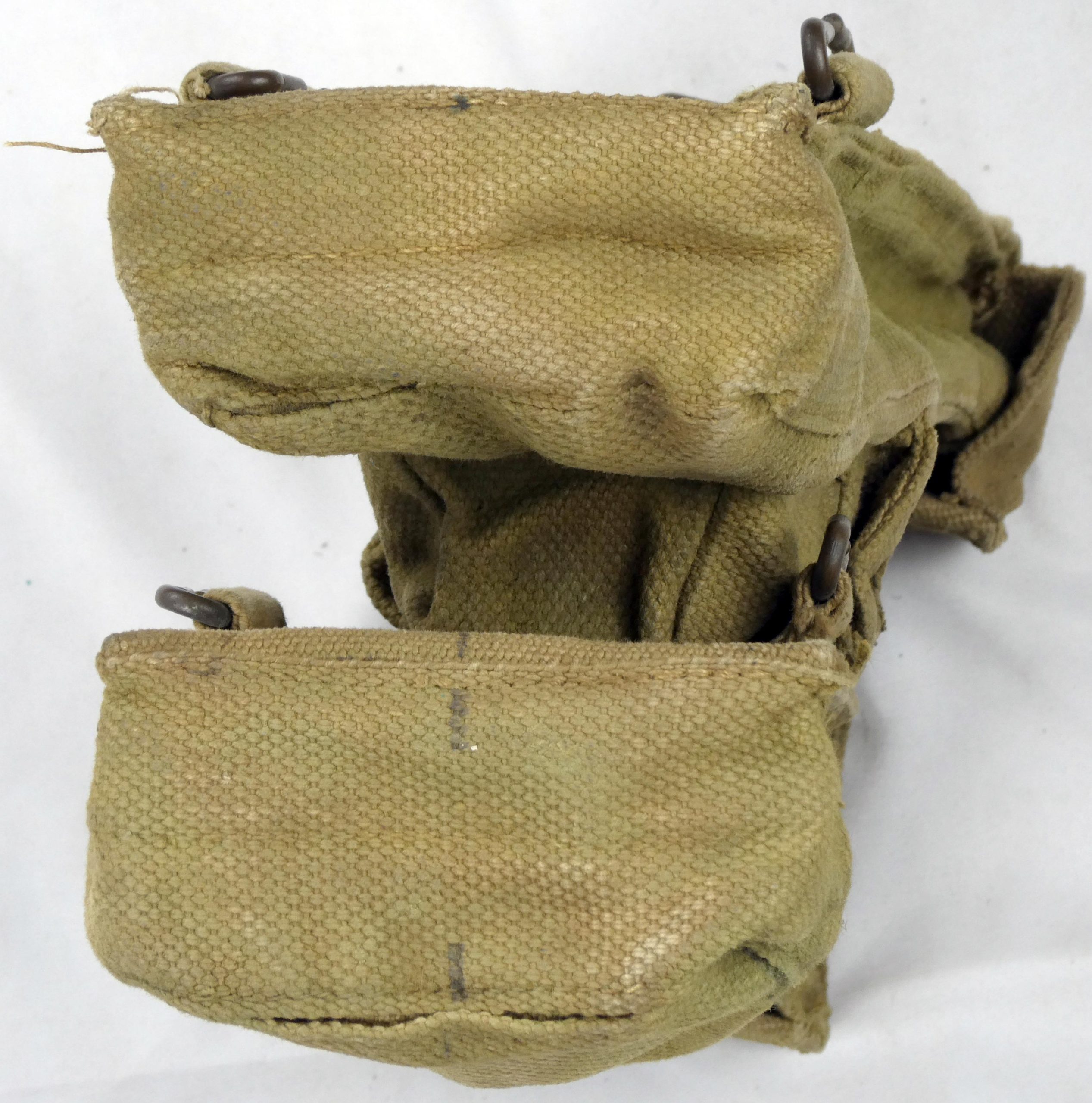
Inside:
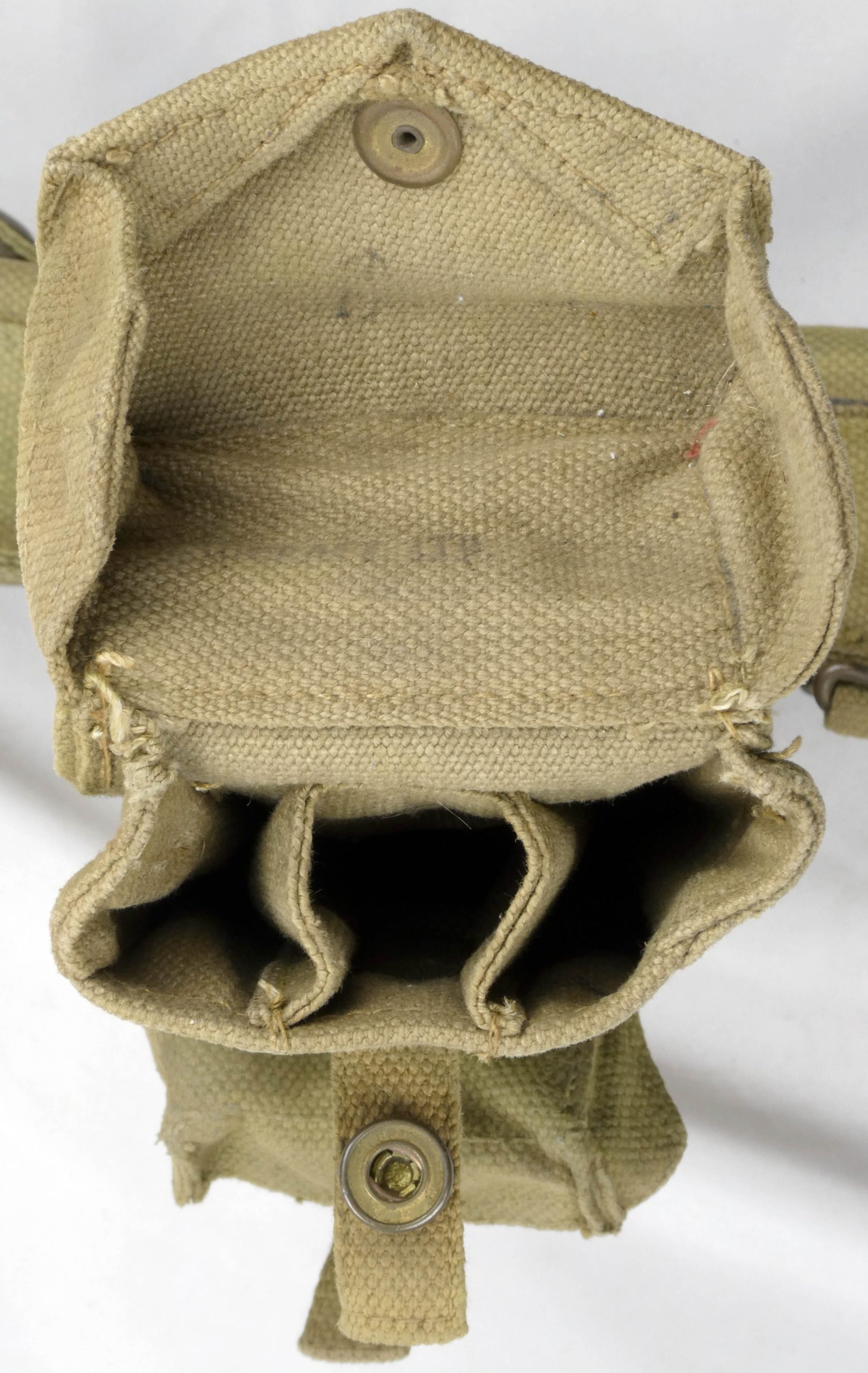
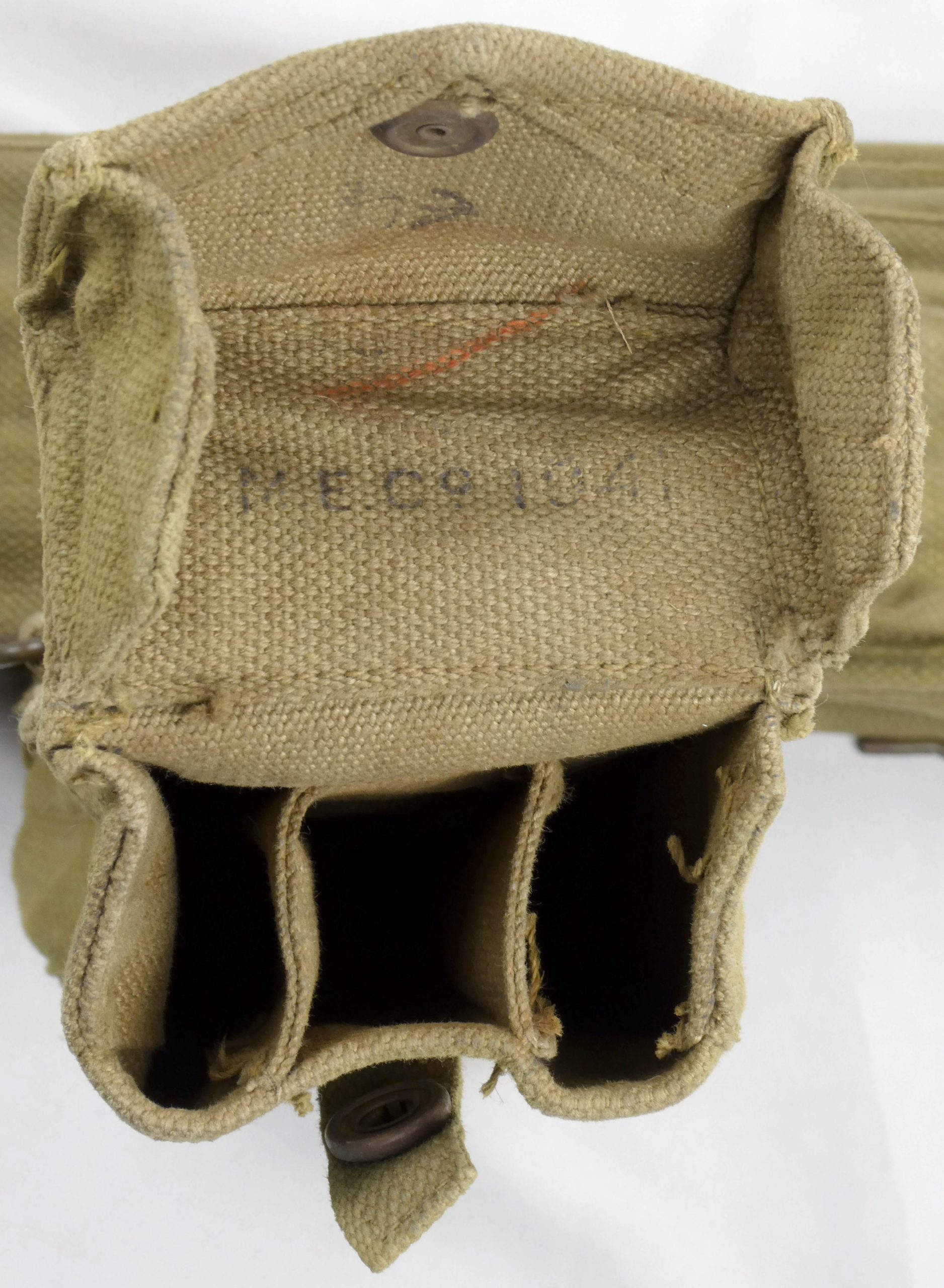
Subdivided into three cells for carrying 3 50-round magazines.
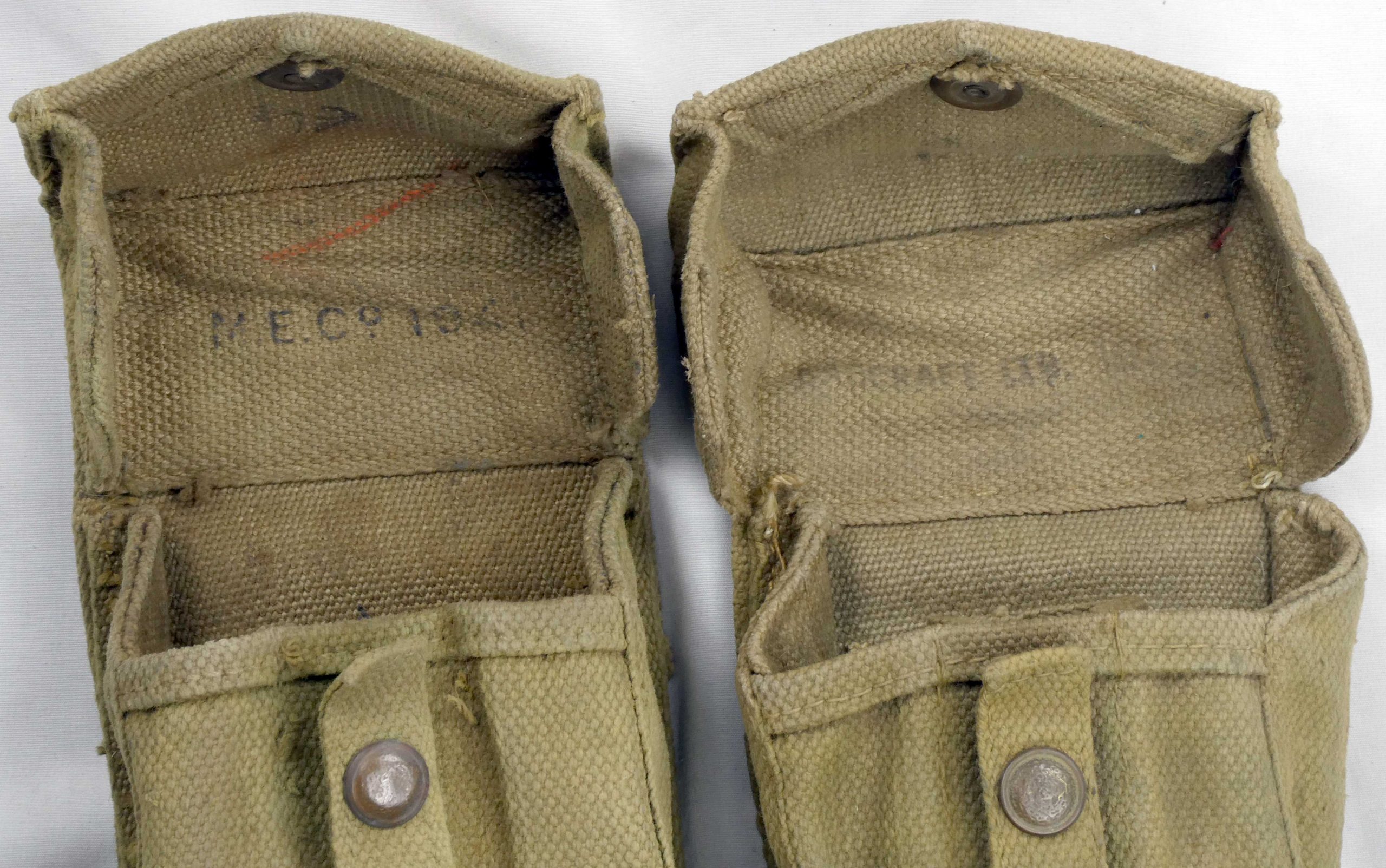
Stamps:
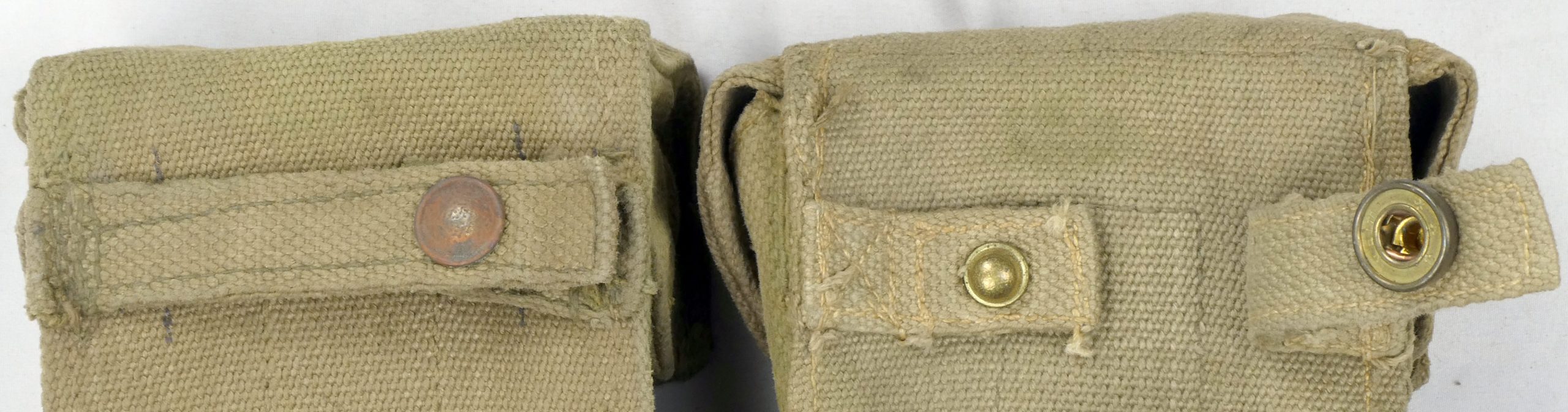
Top Strap:
Usage Photos:
Commonwealth:
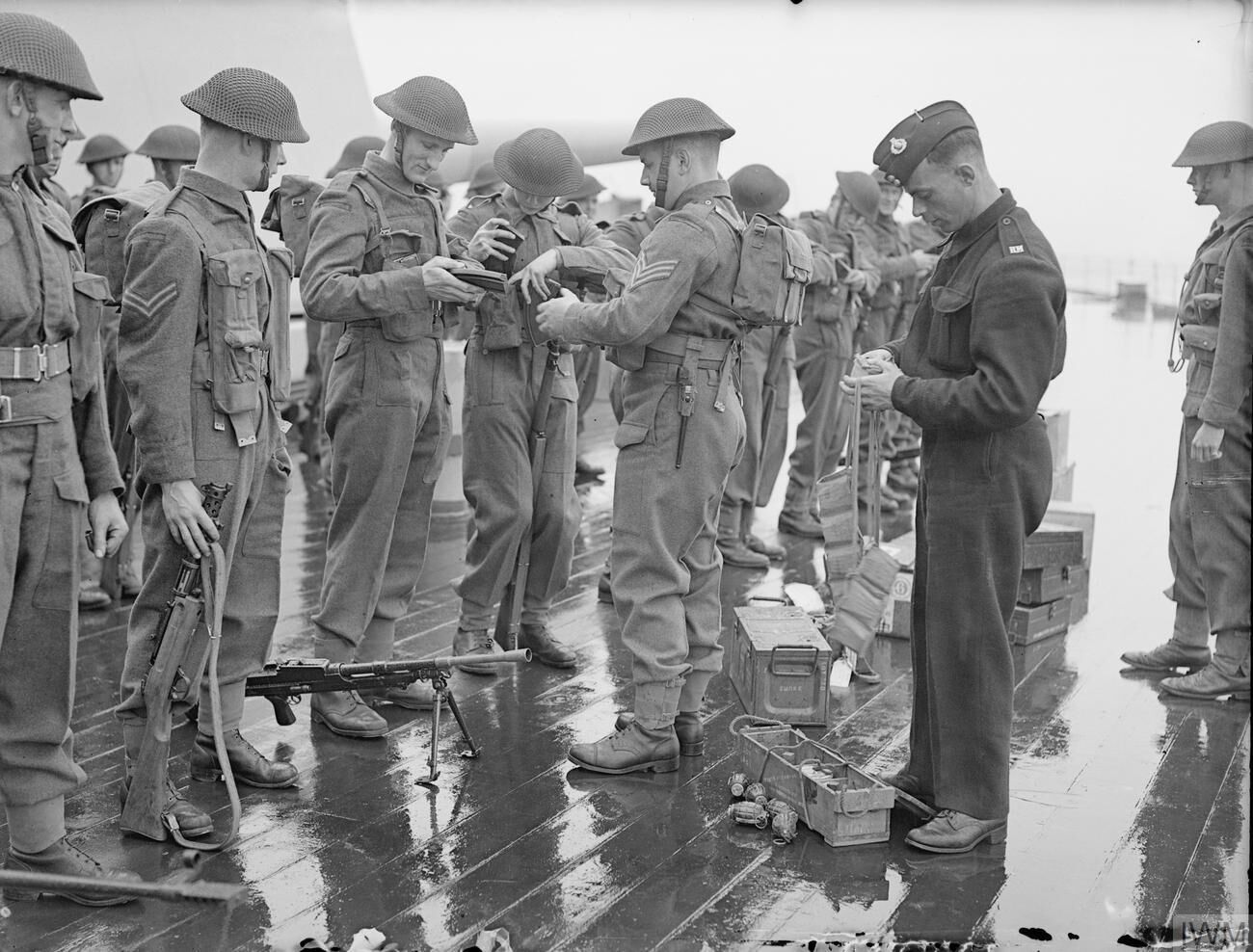
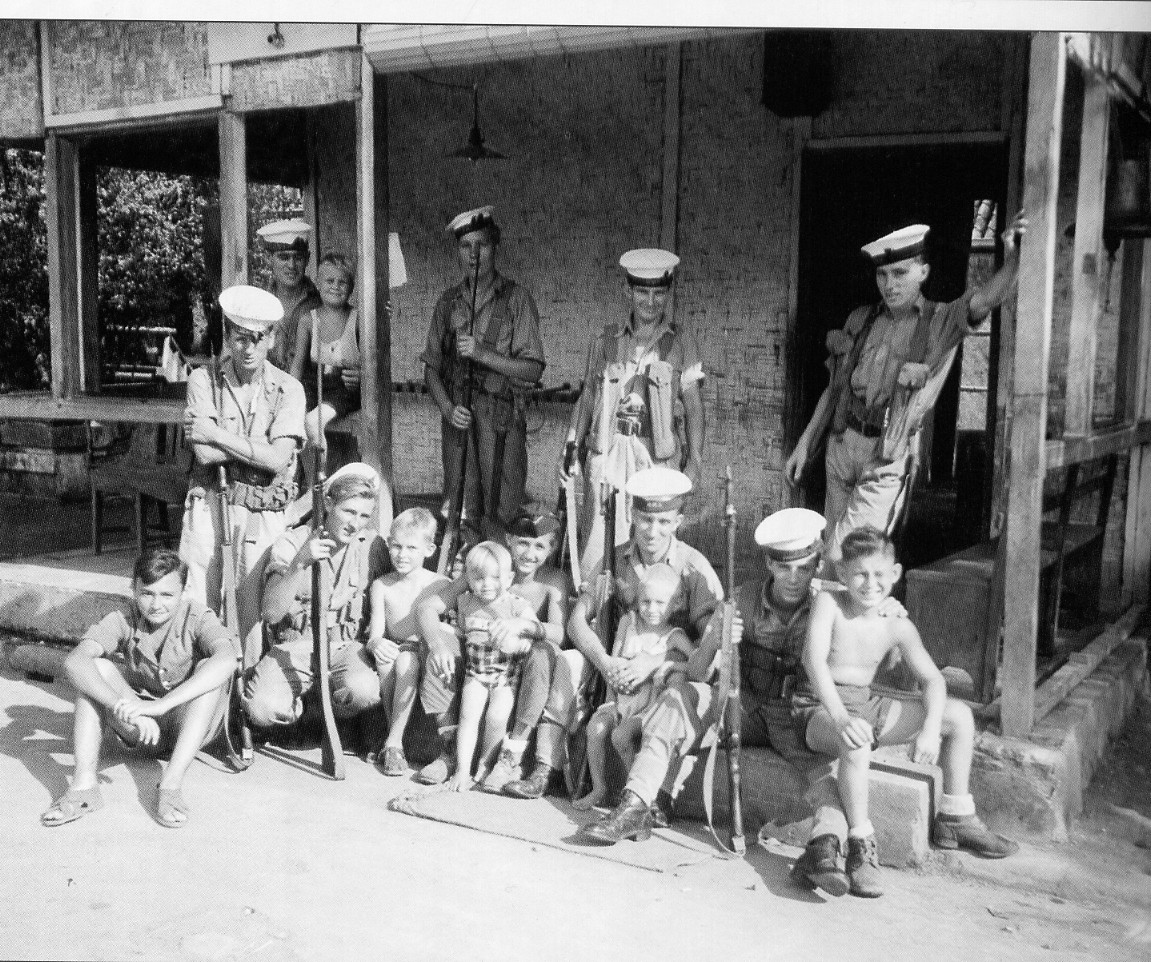
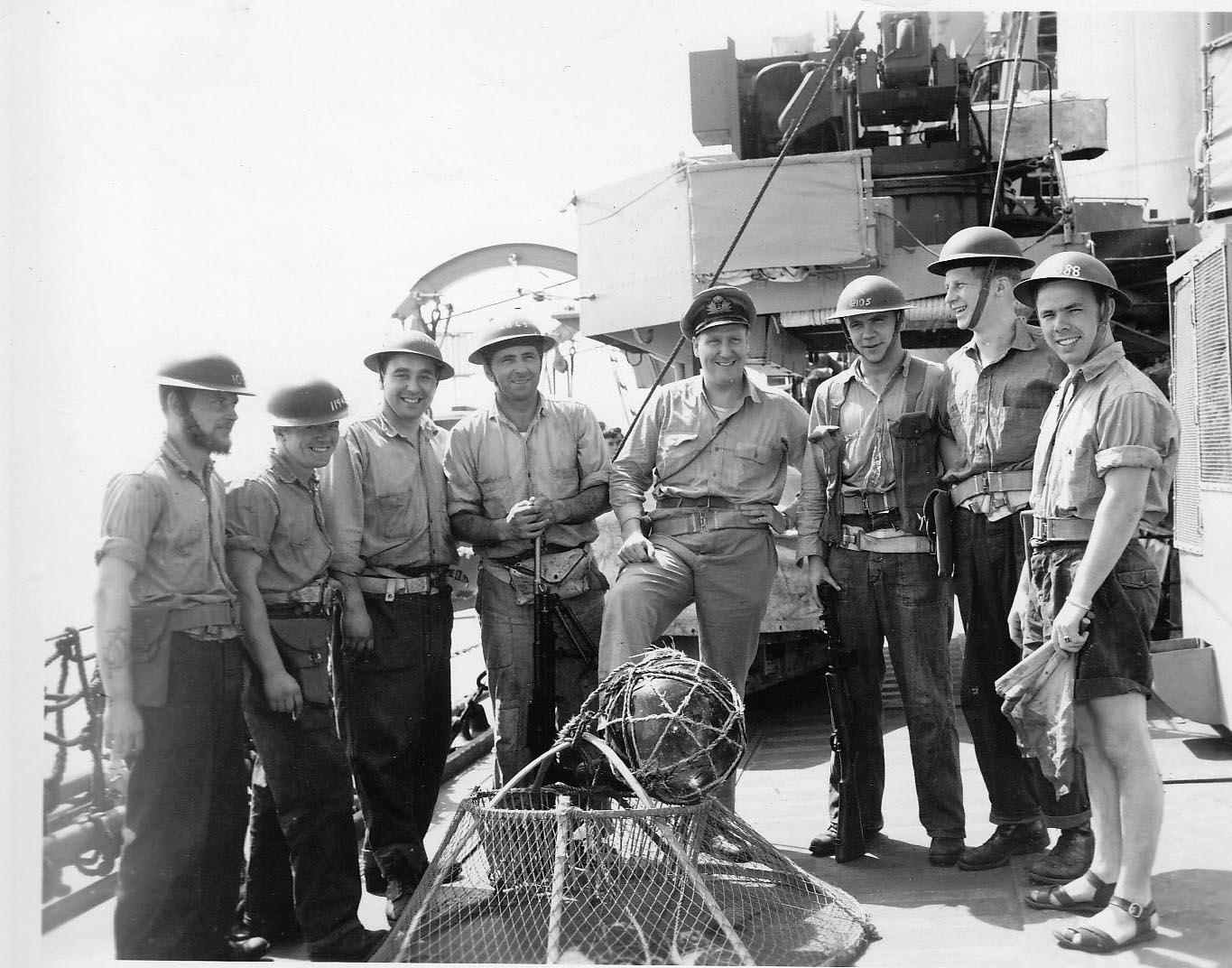
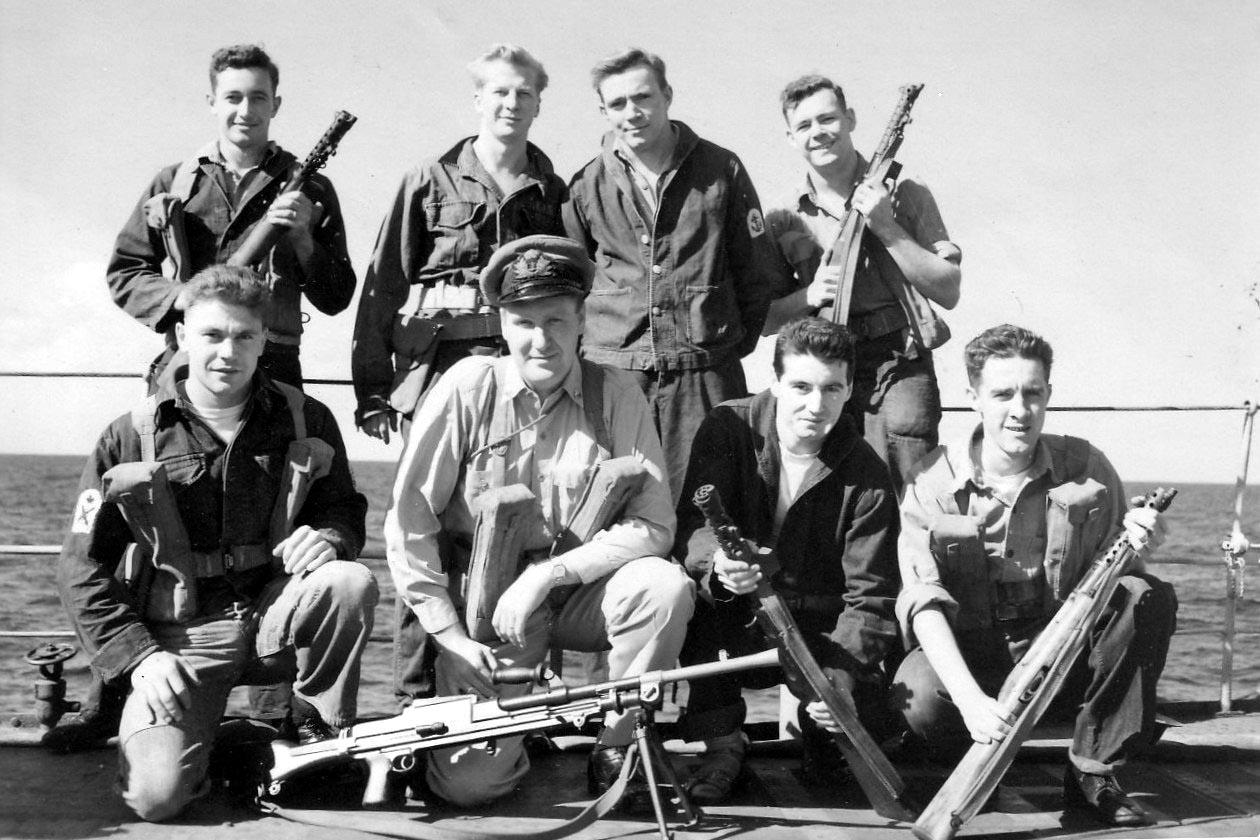
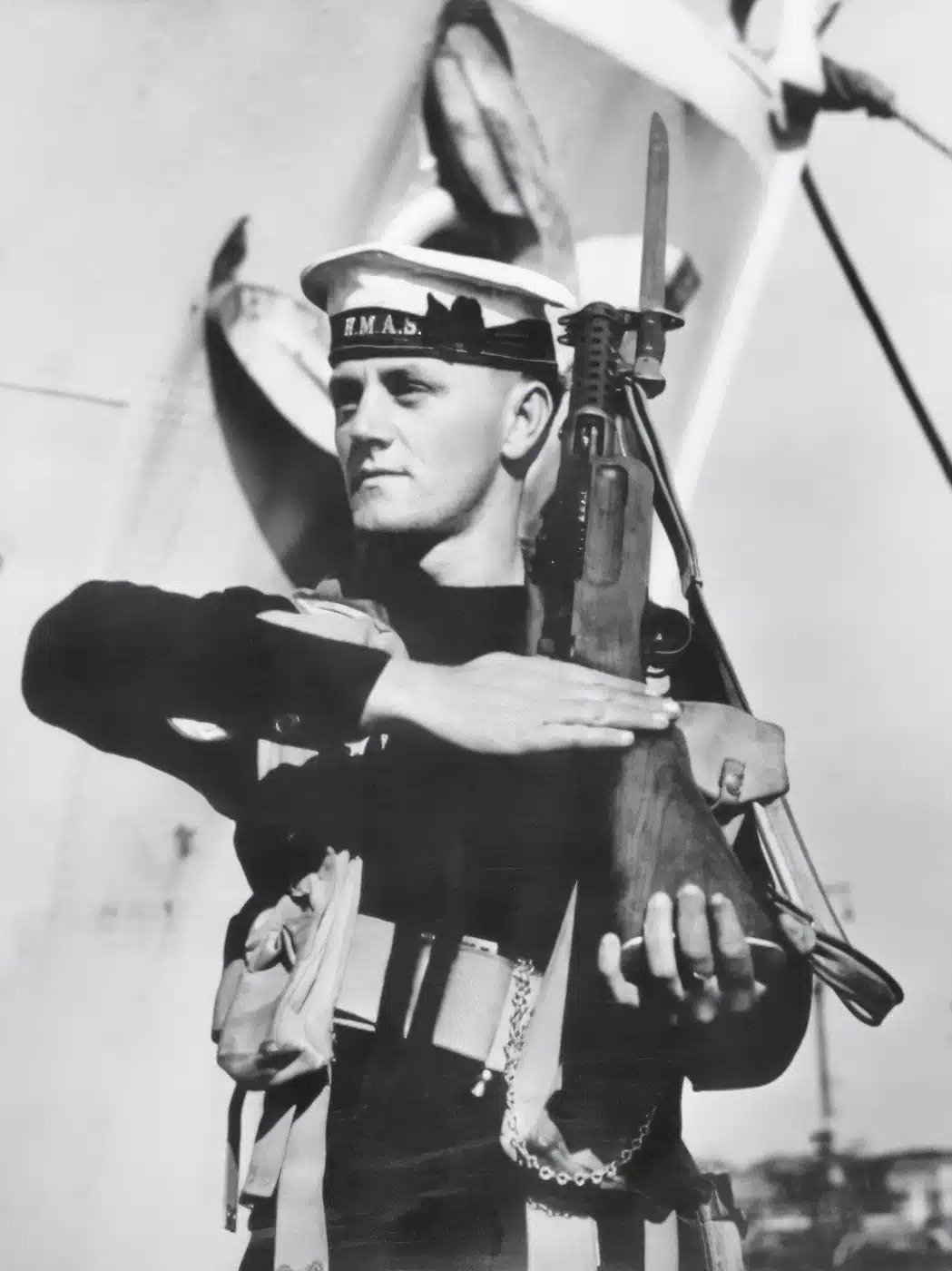
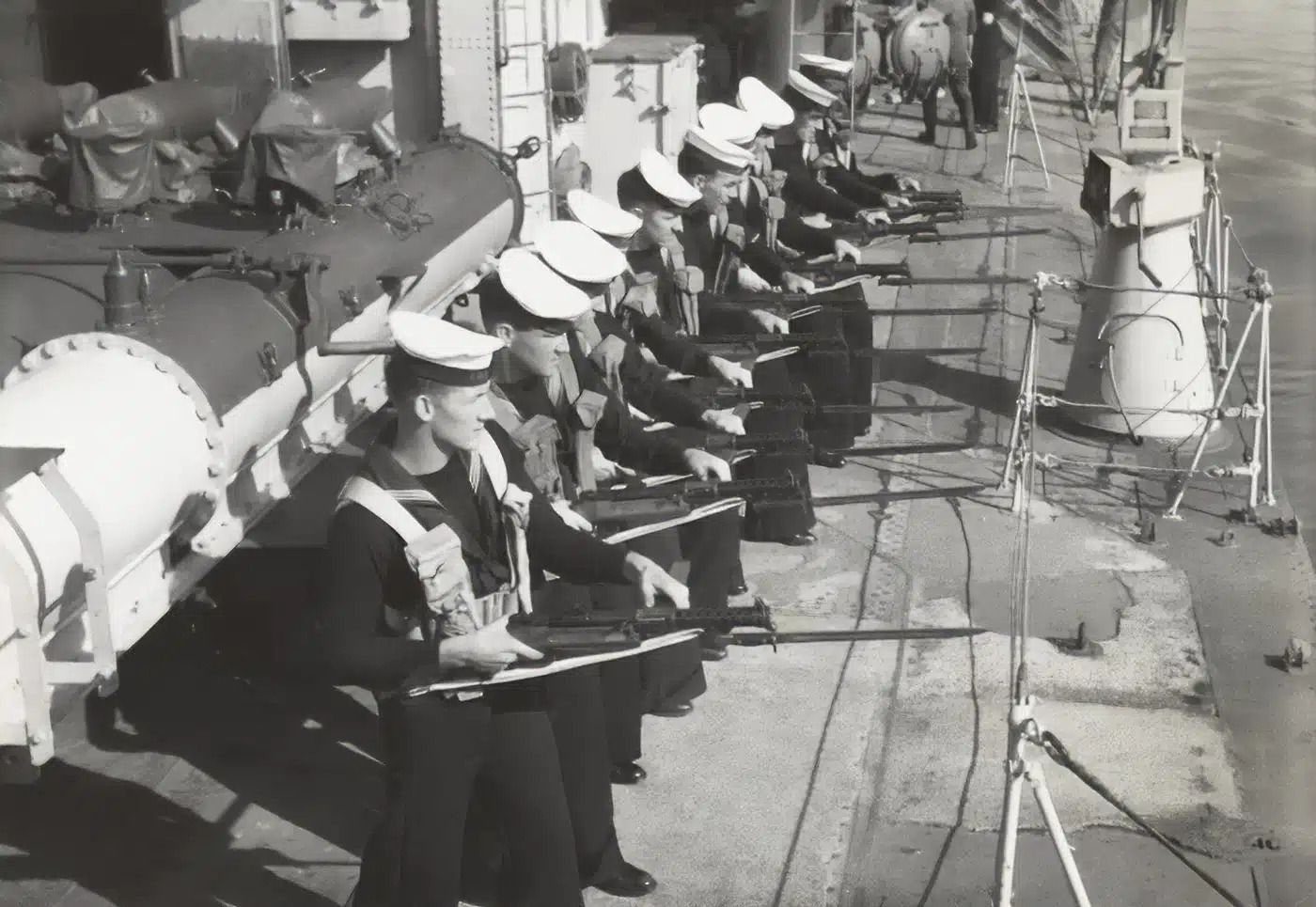
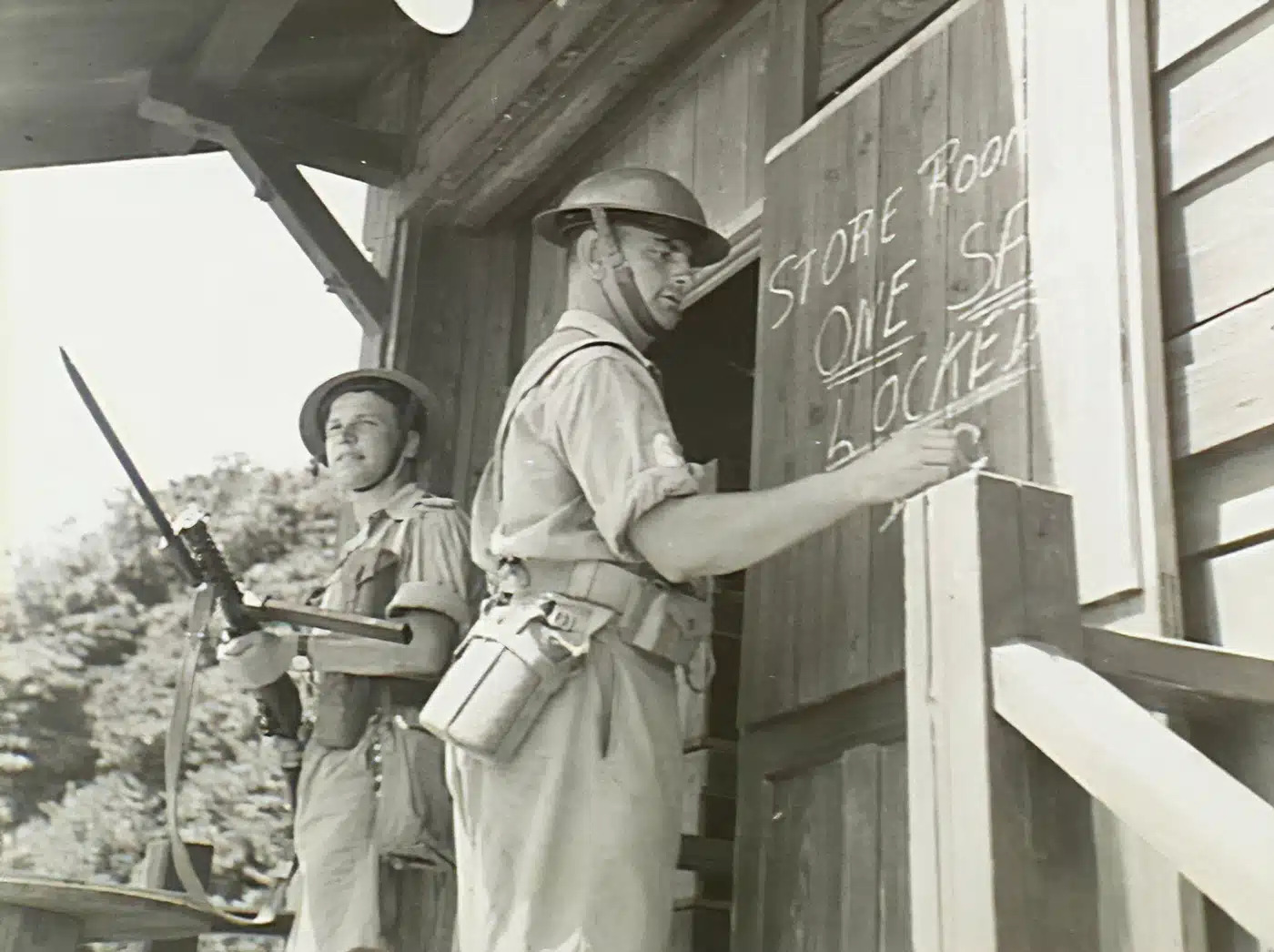
Commonwealth Navies extensively used the Lanchester for boarding and landing parties.
Great Britain:
Canada:
World War II:
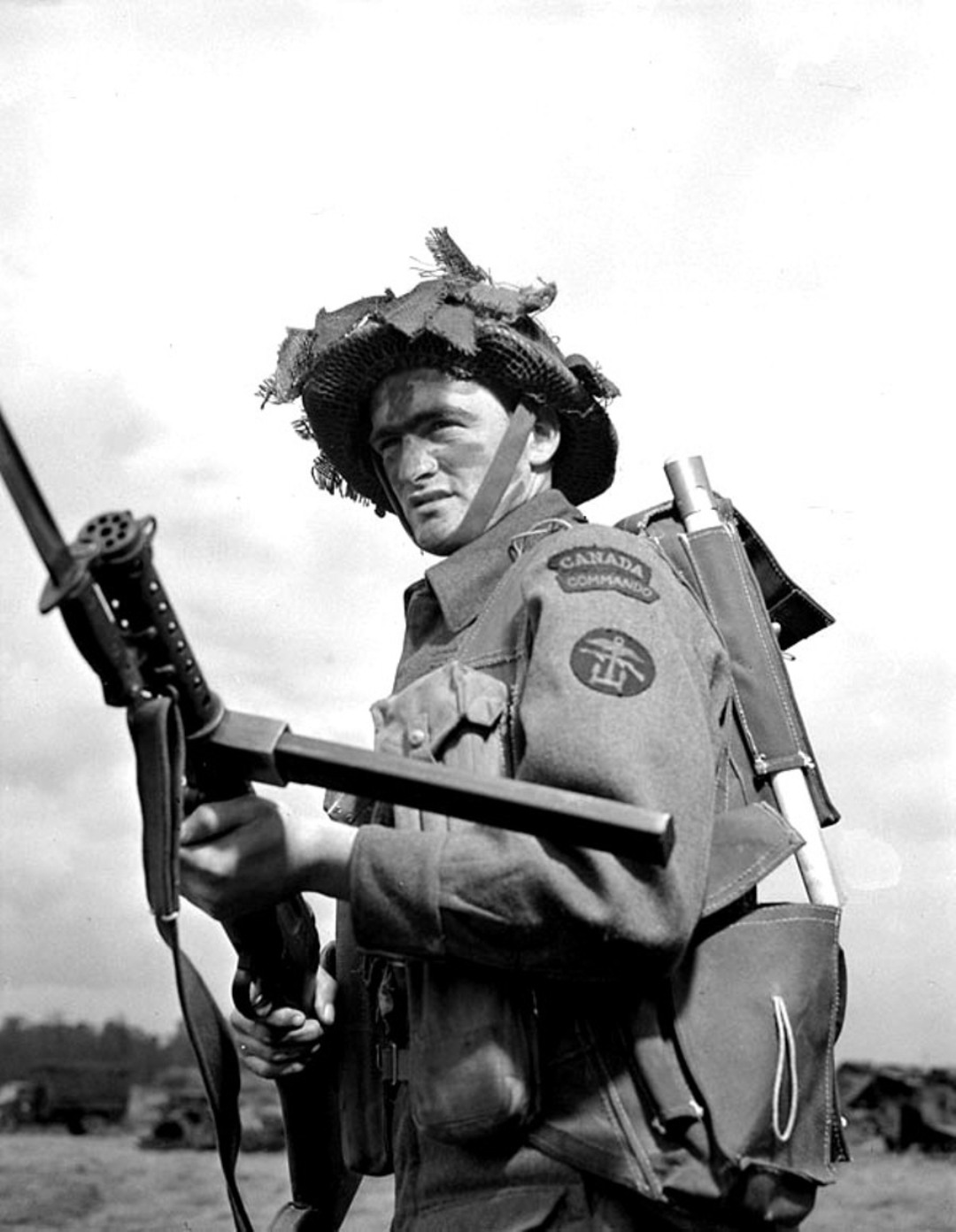
The Royal Canadian Navy Beach Commando W secured Juno Beach in Normandy after the D-Day landings, helping to bring in vital supplies onshore. It was deployed between July 7 and August 22, 1944, seeing little action before returning to the UK, where it was disbanded on August 30, 1944. [10]
Korean War:
Australia and New Zealand:
Netherlands (Dutch East Indies):

The Netherlands was one recipient of surplus Lanchesters after World War 2, which they used during the Dutch Indonesian War/Indonesian National Revolution (1945 – 1950). [2][16]